






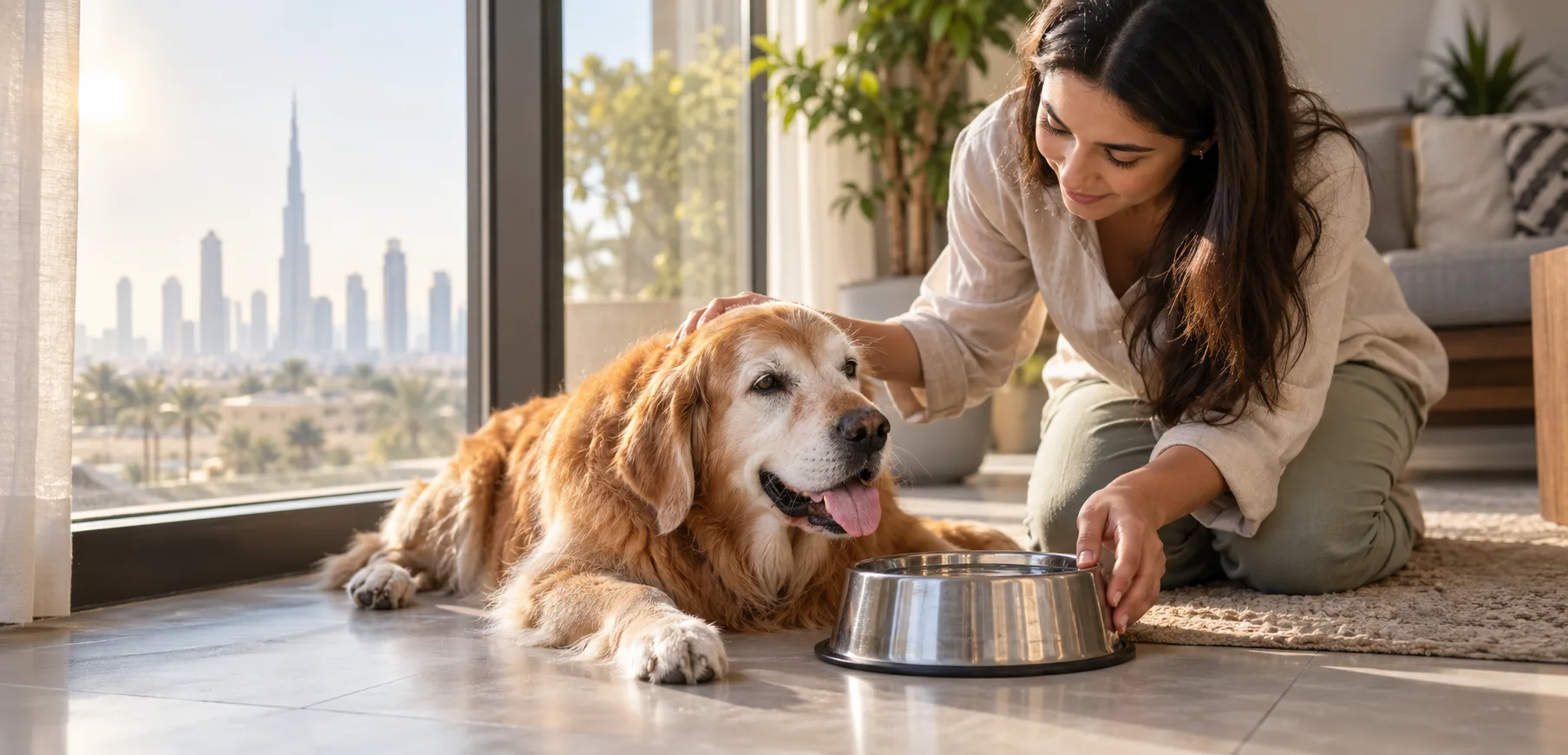
Once temperatures rise above 40 degrees Celsius, Dubai’s summer can be challenging for any dog. For senior dogs, the risks are even greater. As dogs age, their bodies become less efficient at regulating temperature, making it harder for them to cope with extreme heat. Conditions that come with age, such as arthritis, kidney disease, heart disease, and diabetes, can further reduce their ability to stay safe and comfortable during the summer months.
Owners of dogs seven and older should not wait for visible signs of distress before adjusting their approach. A younger, healthier dog can tolerate an afternoon in the sun with minimal consequence, but an older one, operating with reduced organ reserve and slower circulation, may not have that same tolerance. The following tips are designed to help pet owners keep their senior dogs comfortable during Dubai’s hot summer months.
Book a Wellness Exam Before Summer Peaks
Few steps are more important before the peak summer heat arrives than scheduling a comprehensive pet wellness exam in Dubai. This is often where underlying risk factors are identified, including cardiovascular disease, chronic kidney disease, obesity, and respiratory conditions that may not show obvious symptoms but can significantly reduce a dog’s ability to cope with high temperatures. A veterinarian will also review current medications, since several common classes of medication interfere with the body’s ability to regulate temperature, a detail easily overlooked outside a clinical setting.
A wellness exam is not reserved for dogs already showing symptoms. It establishes a clinical baseline for the veterinary team, which becomes the foundation for a summer care plan built around your dog’s actual health status rather than generic seasonal advice.
Learn to Recognise the Early Signs of Heatstroke
Heatstroke is not a condition to observe passively. It occurs when a dog’s core temperature climbs beyond the point at which the body can cool itself, and senior dogs reach this threshold more rapidly than younger animals because they have less physiological reserve to draw on. Watch for persistent heavy panting, an elevated heart rate, gums that appear unusually pale or red, restlessness, vomiting, weakness, or loss of coordination. Collapse and seizures can occur in severe cases.
If any of these signs appear, prompt action is essential. Move the dog into a cool, air conditioned space immediately, offer small amounts of cool water, and apply cool water to the paw pads, ears, and abdomen while arranging veterinary transport. Organ damage from heatstroke can develop within minutes, so seeking an emergency vet in Dubai without delay can significantly improve your dog’s chances of recovery.
Reconsider the Timing of Exercise
Exercise remains important for senior dogs during the summer, but it should be adjusted to suit the season. Midday heat in Dubai, combined with extremely hot ground surfaces, can be dangerous for older dogs and should be avoided whenever possible. Schedule walks in the early morning or after sunset, when both the air and pavement have had time to cool. Keep walks shorter than you would during cooler months, and allow your dog to set the pace rather than following a routine designed for milder weather.
Senior dogs often do not show fatigue as clearly as younger dogs. They may not slow down or display obvious signs that they need to rest, so it falls to the owner to end a walk before the dog becomes overheated or exhausted.
Assess Ground Temperature Before Walking
Pavement, asphalt, and sand can cause serious burns to a dog’s paw pads, and older dogs face heightened risk for a specific reason: reduced sensation in the extremities, frequently linked to arthritis or nerve changes that come with age. A dog with diminished sensitivity is less likely to withdraw from a hot surface the way a younger, more responsive dog would, meaning genuine tissue damage can occur before any visible reaction sets in.
The assessment itself is simple. Press the back of your hand against the ground and hold it there for five to seven seconds. If the sensation becomes uncomfortable, the surface is unsafe for walking. Grass and shaded routes are preferable alternatives, and paw balm or protective boots offer a meaningful additional safeguard.
Maintain Consistent Hydration
Dehydration affects senior dogs more severely than younger adults, for several reasons: reduced kidney efficiency, medications that influence fluid balance, and a thirst response that weakens progressively with age. Once dehydration develops, it compounds heat stress, accelerating a dog’s progression toward heatstroke and organ strain faster than either factor would on its own.
Fresh, cool water should remain available indoors and outdoors at all times and should be replaced frequently, since dogs commonly decline water once it has warmed, even while thirsty. A modest addition of broth that is low in sodium can encourage intake in reluctant drinkers. Monitoring daily water consumption, even informally, tends to reveal early problems before they become clinically apparent.
A Parked Vehicle Is Never a Safe Option
This precaution admits no exceptions during Dubai’s summer months. A vehicle’s interior can reach dangerous temperatures within three to five minutes, and neither cracked windows nor shaded parking meaningfully alters that outcome. Senior dogs, already operating with compromised temperature regulation, retain essentially no margin of safety if left in such an environment, even briefly.
If a dog cannot accompany its owner to a destination, it should be left at home in a cool, air conditioned environment rather than inside a parked vehicle, regardless of how short the trip may seem. Deaths from heat exposure in parked cars remain among the most preventable emergencies seen in veterinary practice, which is why this rule should never be bent.
Monitor Joint Health and Existing Conditions
Arthritis often worsens during periods of extreme heat, and even hard indoor flooring that has retained warmth throughout the day can increase joint discomfort, despite the absence of direct sunlight. Providing orthopaedic bedding in a consistently cool room can help reduce this additional strain.
For dogs already living with conditions such as kidney disease, heart disease, or metabolic disorders, summer heat rarely acts alone. It can worsen existing health problems, and these changes may progress rapidly. Even subtle changes in appetite, energy levels, or water intake that might seem insignificant during cooler months should prompt a call to your veterinary clinic in Dubai, as the window for early intervention narrows quickly once heat stress is involved.
Groom for Heat Management
It is a common misconception that shaving a dog improves heat tolerance, but this is not how the coat works. The coat serves as natural thermal insulation, shielding the skin from direct sun while assisting in temperature regulation. Removing this layer increases the risk of sunburn and disrupts the dog’s natural cooling mechanism, achieving the opposite of what was intended.
A better approach is a professional groom focused on removing excess undercoat and resolving matting, which preserves the coat’s protective function while reducing unnecessary bulk. Coat requirements vary considerably by breed, so it is worth consulting a veterinarian or professional groomer about the right approach for your dog specifically, rather than applying a uniform standard.
Establish Regular Veterinary Monitoring Throughout Summer
A single examination before summer is valuable, but it should not be the only point of assessment. Senior dogs benefit from more frequent wellness checks as the season progresses, since sustained heat can lead to gradual, easily overlooked changes such as mild dehydration, slow weight loss, and early signs of organ stress that a single early visit may not detect.
Consistent monitoring remains one of the most effective ways to extend both the length and quality of an older dog’s life, particularly in a climate as demanding as Dubai’s. If you have not yet built a relationship with a trusted veterinary clinic in Dubai, this season is the right time to start, because proactive care matters most during exactly the months a senior dog needs it.
Proactive Summer Care Helps Senior Dogs Thrive
An older dog has already given you years of companionship. Helping them navigate Dubai’s extreme summer temperatures safely comes down to consistent hydration, appropriate exercise, close observation, and regular veterinary care. At The Ark Animal Clinic, located in Dubai Silicon Oasis, senior dog care in Dubai is guided by a preventive and individualised approach, focused on early detection of heat risks and the health conditions that come with age. We support pet owners with tailored guidance to help maintain stability and comfort during extreme weather.
Each precaution may seem simple on its own, but together they form a comprehensive approach to protecting your senior dog’s health, comfort, and wellbeing during the hottest months of the year. With proactive care and ongoing veterinary support, your ageing companion can continue to enjoy a healthy summer.