
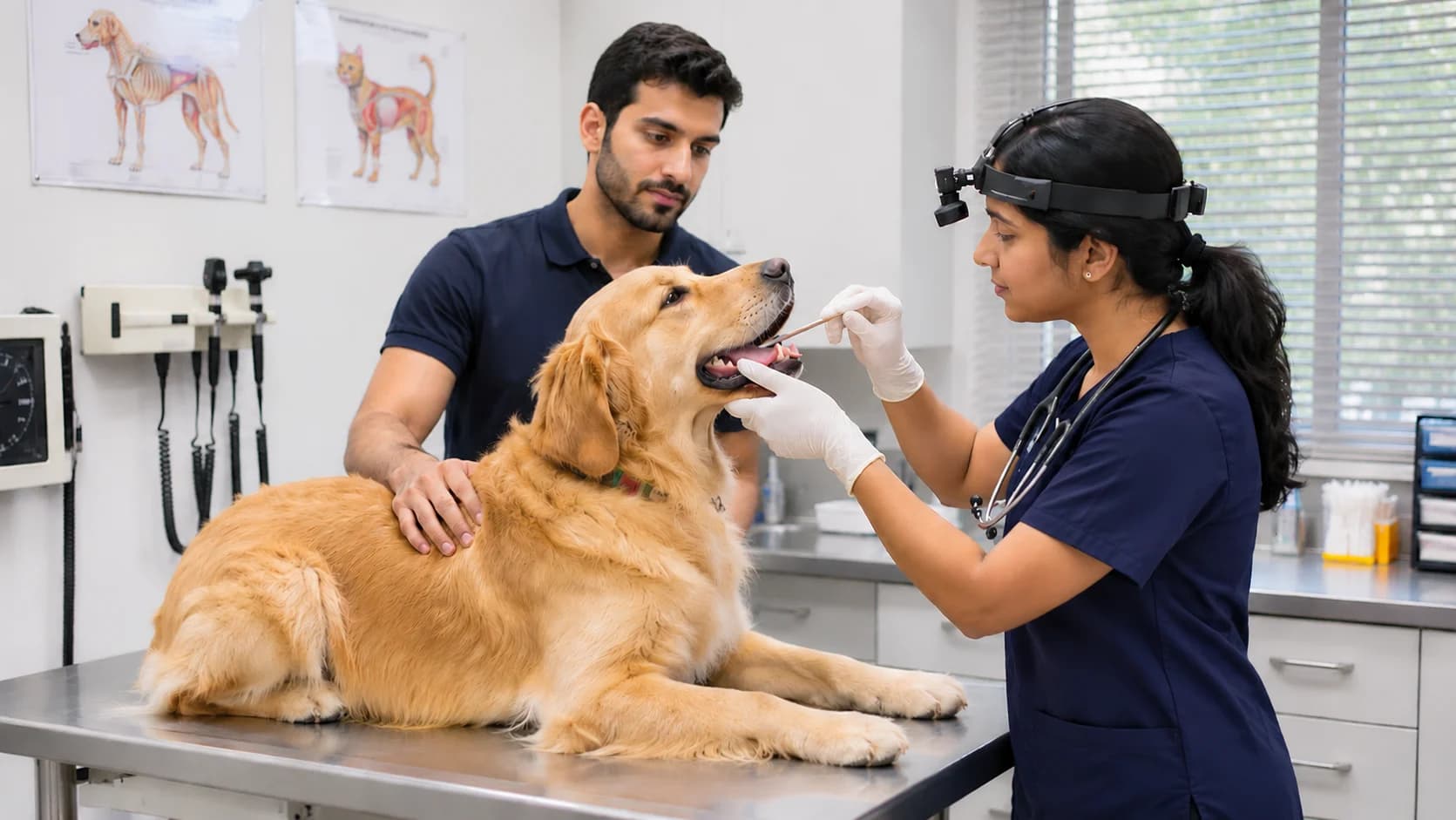
It can be scary to see your dog or cat suddenly struggling to breathe. Choking is a real emergency, as a blocked airway can quickly become life-threatening because oxygen cannot reach the lungs. If you know what to look for and what to do in those first few moments, you can help yourself respond while you are arranging immediate veterinary care.
If your pet is choking, try to be as calm as you can and act fast. The first thing to do is look for an obstruction, and if you can’t properly clear it out, call the professionals straight away. If an object is removed successfully, your pet should still see a veterinarian, since choking can potentially harm the throat or lead to issues with breathing.
What Are the Signs of Choking in Pets?
The signs of choking will vary depending on whether the airway is partially or completely blocked. Typical warning signs include:
- Sudden difficulty breathing or gasping
- Loud or unusual breathing sounds
- Gagging or repeated retching
- Pawing at the mouth or face
- Holding the mouth open
- Drooling or difficulty swallowing
- Anxiety, restlessness or frantic behaviour
- Pale, white, grey or blue gums or tongue
- Weakness, collapse or unconsciousness
A pet with a significant airway obstruction may not be able to breathe normally, and can quickly become unconscious. A blue or grey tongue or gums is especially worrying as this can be a sign of a lack of oxygen.
What Causes Choking in Dogs and Cats?
Pets can choke when food, toys or other objects become lodged in their mouth, throat or airway. Dogs are especially likely to swallow foreign objects, but cats can also choke on toys, food or little household items.
Possible causes include:
- Pieces of food or treats
- Toys or broken toy parts
- Bones, rawhide or dental chews
- Small household objects
- Foreign material
- Vomit or regurgitated material
- Swelling of the tongue or throat following an allergic reaction
- Trauma affecting the throat or airway
Foreign bodies can also become lodged farther down the digestive tract rather than the airway. These situations are still potentially serious and may require veterinary treatment.
What to Do If Your Pet Is Choking
If your pet is choking, act quickly and calmly. Here are a few things you should do while you arrange immediate veterinary care.
Stay Calm and Assess Your Pet
Approach with caution. Even a calm animal will bite when frightened. If you have someone else with you, ask them to ring an emergency vet in Dubai, and you can assess your pet.
If your pet is still breathing and coughing hard, let them cough it out rather than pulling the stomach thrusts right away. If breathing is severely compromised or the pet is not breathing at all, immediate care is essential.
Check the Mouth for a Visible Object
If your pet is conscious, gently open the mouth and check for any visible and easily removable object.
If you can reach the thing without forcing it farther down the throat, remove it gently. Don’t mindlessly shove your fingers down the throat. Do not waste time trying repeatedly to remove the object if it is not seen or cannot be easily removed. Move on to emergency measures and veterinary care.
Use Abdominal Thrusts if the Airway Remains Blocked
For a dog with a complete obstruction that cannot be removed, abdominal thrusts may help dislodge the object.
For a standing dog, position yourself behind the animal and place your arms around the abdomen just behind the rib cage. Make a fist and use firm, quick inward-and-upward thrusts. For a smaller pet, the technique needs to be adapted to the animal's size.
Cats and small dogs require particular care because excessive force can cause injury. If you are unsure of the technique, follow instructions from a veterinary professional over the phone while travelling to an emergency clinic. If the animal is too large to lift, abdominal thrusts can be performed with the pet lying on its side, using controlled pressure behind the rib cage.
Check the Mouth Again
Check the mouth again after the thrusts. If the object has moved to a position where you can see it and remove it safely, remove it gently. If the airway remains blocked, continue appropriate first-aid measures while you seek veterinary assistance.
If Your Pet Becomes Unconscious
An unconscious pet that is not breathing normally requires immediate emergency intervention.
Check for breathing and signs of circulation quickly. If your pet is not breathing and you cannot detect a heartbeat, begin pet CPR if you have been trained or follow real-time instructions from a veterinary professional.
Current veterinary emergency guidance generally uses chest compressions at approximately 100-120 compressions per minute, with rescue breaths when appropriate. CPR is physically demanding, and technique differs between dogs and cats and according to body size, so professional guidance or certified pet first-aid training is strongly recommended.
Why Your Pet Needs a Vet Even After the Object Is Removed
It may be tempting to assume everything is fine once your pet starts breathing normally again. However, choking can cause injuries that are not immediately obvious.
An obstruction or forceful first-aid attempt can irritate or injure the mouth, throat or airway. A period of oxygen deprivation can also have serious consequences. In addition, inhalation of food, vomit or other material can contribute to respiratory complications such as aspiration pneumonia.
For this reason, veterinary assessment is recommended even if the object comes out and your pet appears normal. A veterinarian can check the airway, breathing and overall condition and determine whether further monitoring or treatment is necessary.
When to Seek Emergency Veterinary Care in Dubai
If your pet is struggling to breathe, has blue or pale gums, has collapsed or is unable to clear an obstruction then choking should always be addressed as an emergency.
If there is an emergency veterinary problem in Dubai, you should call a veterinarian clinic immediately and let them know what happened. It’s a good idea to call ahead so the veterinary team is prepared for your visit.
Ark Animal Clinic provides pet emergency care in Dubai. We deal with urgent problems such as breathing difficulties, ingestion of foreign objects, allergic responses, trauma and serious disease. We also offer diagnostic imaging, lab tests, surgery and other veterinary procedures.
How to Prevent Choking in Pets
You cannot prevent every accident, but a few simple habits can reduce the risk:
- Choose toys that are appropriately sized for your pet.
- Discard damaged or breaking toys and replace them.
- Supervise pets when they are playing with chew toys.
- Avoid giving bones or treats that can splinter or break into dangerous pieces.
- Keep small household objects away from curious pets.
- Watch pets that eat very quickly and discuss suitable feeding options with your veterinarian.
- Keep strings, rubber bands, coins and other small objects away from cats and dogs.
- Get trained in basic pet first aid and CPR from a qualified training provider.
- Keep the contact details of an emergency vet and your regular vet’s number available at all times.
Choking in Pets: Act Quickly, But Safely
If your pet is choking, you need to act quickly. Signs such as extreme trouble breathing, pawing at the mouth, strange breathing sounds, pale or blue gums and collapse might help you assess how severe the condition is.
Having the details of an animal clinic in Dubai that provides emergency services saved in your phone can make a major difference during a crisis for pet owners in Dubai. The most important thing to remember is simple: first aid is merely an emergency measure, not a substitute for veterinary care. Even if your pet seems perfectly well after choking, seek a veterinary evaluation to ensure there is no underlying injury or breathing issue.

