





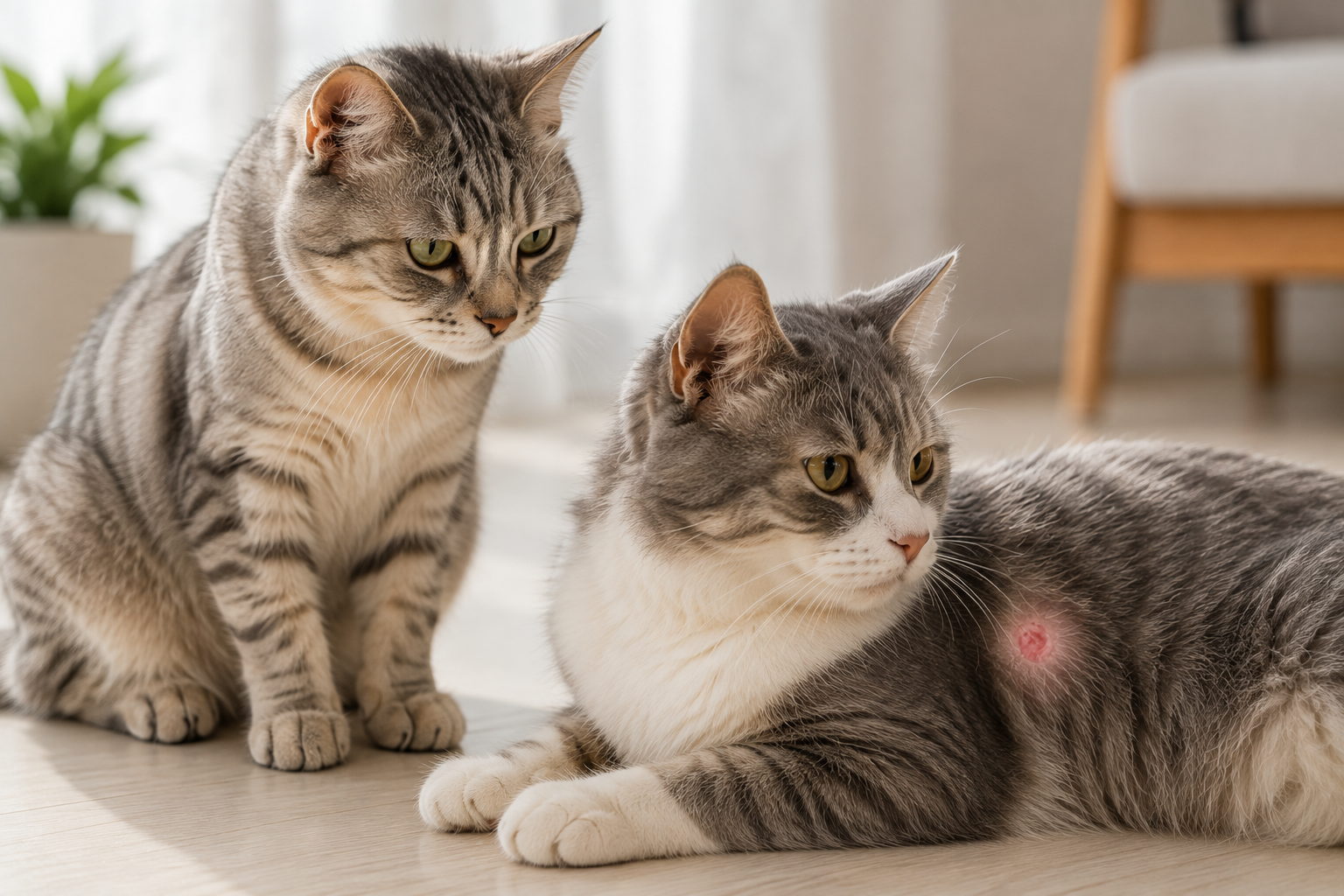
Cats are known for their meticulous grooming habits, but sometimes that self-care crosses a line and becomes self-harm. Heat spots in cats, commonly referred to as hot spots or acute moist dermatitis, are rapidly developing skin lesions that can turn a small patch of irritated skin into a painful, spreading sore almost overnight. They are more common than many pet owners think, and the warm climate across the UAE can make skin flare-ups more likely.
In this blog, The Ark Animal Clinic walks you through everything you need to know, from spotting the early signs to understanding treatment and keeping your cat comfortable long term.
What Are Heat Spots in Cats?
Acute moist dermatitis, or heat spots, is the result of a cat licking, biting, or scratching the same spot on its skin repeatedly. Some pet owners may also describe this irritation as heat rash in cats, especially when it appears during warmer months, but a vet can confirm whether it is a hot spot, an allergic reaction, a parasite issue, or another skin condition. The self-trauma breaks the skin barrier and creates a warm, moist environment where bacteria multiply and infection spreads quickly. Early recognition and prompt treatment are important because what may seem like a mild irritation can turn into a raw, oozing wound in hours.
What Are the Symptoms of Heat Spots in Cats?
The earlier you detect heat spots, the sooner your cat can enjoy a comfortable and speedy recovery. The problem is that symptoms can appear suddenly, and the sore is often hidden under matted fur before you realise something is wrong. Checking your cat’s skin regularly is one of the most valuable habits you can build as an owner, particularly in the warmer months.
Visible Skin Changes
- Areas of skin that are red, swollen, and warm or moist to the touch
- Fluid or pus that oozes out and causes fur to clump and mat around the area
- Loss of hair over the affected area or fur that looks crusty and stuck to the wound
- Skin that looks raw or broken, sometimes with a distinct unpleasant odour
Behavioural Changes
- Obsessive licking, chewing, or scratching at one specific spot
- Restlessness or irritability, especially when the affected area is touched
- Avoidance of grooming or handling around the face, chin, neck, or tail base
- Visible discomfort when resting or moving, depending on the location of the sore
What Causes Heat Spots in Cats?
Heat spots do not just happen randomly. Heat rash in cats is generally associated with hot weather, but these skin lesions typically start with an underlying cause that triggers recurrent scratching, licking, or biting. The first step in treating them is identifying that trigger, because if the root reason is not addressed, heat spots can reappear.
Parasites
The most frequent causes of heat spots in cats are flea bites and mites. A single flea bite is enough to make a sensitive cat scratch persistently until the skin is broken and infected. Prevention is key, especially in the UAE climate, where fleas and mites are active all year round.
Allergies
Certain food ingredients, environmental allergens such as dust and pollen, and household products such as cleaning sprays and fabric softeners can all cause allergic reactions in cats. These reactions leave the skin itchy and irritated, and your cat will try to soothe it by licking and rubbing, which is the perfect recipe for a heat spot.
Stress and Behavioural Over-Grooming
Compulsive grooming can be caused by anxiety, boredom, and changes in the cat’s environment. A cat that over-grooms due to stress can repeatedly work at the same area of skin until it becomes raw and infected. This is especially common in indoor cats that do not get enough mental stimulation or in cats adjusting to a new home.
Minor Injuries and Skin Irritation
Insect bites, small scrapes, matted fur, and trapped moisture can all create a starting point for a heat spot. Once the skin is damaged and your cat starts grooming the affected area, bacteria already present on the skin can multiply quickly and cause infection.
Which Cats Are at Higher Risk?
Any cat can develop heat spots, but they are more likely to occur in certain cats depending on their coat type, lifestyle, and health. Knowing your cat’s individual risk profile helps you take proactive steps to prevent flare-ups all year long.
- Longhaired and thick-coated cats, in which saliva and moisture can pool beneath dense fur and create warm, humid conditions that promote bacterial growth
- Cats with known allergies to food, environmental triggers, or household products, as their skin tends to be more reactive
- Cats living in hot climates such as Dubai, where warm conditions persist for much of the year
- Indoor cats that are stressed or bored and over-groom due to a lack of enrichment
- Senior cats or cats with underlying health problems such as arthritis or ear infections, which cause pain and prompt licking at those areas
How Does a Vet Diagnose Heat Spots in Cats?
Several skin conditions can look similar on the surface, so an accurate diagnosis matters. Your veterinarian will conduct a comprehensive physical exam at an animal clinic in Dubai and ask about your cat’s medical history, including any allergies, past skin problems, and changes in the environment or diet. Where needed, further diagnostics such as skin swabs, parasite testing, fungal testing, or allergy testing help uncover the underlying cause and shape the best treatment strategy for your cat.
Treatment Options for Heat Spots in Cats
Treating heat spots means addressing both the wound and its underlying cause. If you notice a heat spot, seek veterinary help as soon as possible, as these lesions can deteriorate rapidly when left untreated. Early care gives your cat the best chance of a smooth and comfortable recovery. The type of treatment always depends on the severity of the lesion and the cause behind it.
Clipping and Cleaning the Area
The veterinarian will gently shave around the area to expose the wound to air and keep moisture from accumulating. The surface is then thoroughly washed with a medicated or antiseptic wash to remove bacteria and debris.
Medications and Topical Care
Treatment depends on severity and can include topical anti-inflammatory or antimicrobial creams, oral antibiotics to clear the infection, and medication to control discomfort and break the itch cycle. Your vet recommends the most appropriate course based on the depth and extent of the lesion.
Preventing Re-Injury
Often, an Elizabethan collar is used to physically block your cat’s access to the healing wound. This is a key step, as even a short period of licking or chewing can undo days of healing and allow the infection to progress deeper.
How to Prevent Heat Spots in Cats
Prevention is far less stressful for both you and your cat than managing a painful active lesion. Most hot spots can be avoided with consistent care and attention to the particular triggers that make your cat susceptible. Building these habits into your routine helps protect your cat’s skin health in all seasons, not only during the summer months.
- Maintain year-round flea and parasite prevention, especially in the UAE, where warm conditions encourage parasite activity
- Brush your cat regularly to remove dead undercoat, prevent matting, and keep the skin beneath the fur clean and well-ventilated
- Work with your vet to diagnose and control food or environmental allergies before they become persistent skin reactions
- Provide environmental enrichment, such as toys, scratching posts, and regular playtime, to help reduce stress-related over-grooming
- Check your cat’s skin at every grooming session, especially where heat spots most commonly occur: the face, chin, neck, belly, and tail base
When Should You Visit The Ark Animal Clinic?
If your cat shows any symptoms of heat spots, such as excessive scratching, changes in the skin, or unusual grooming behaviour, do not ignore it, as delay can lead to more harm. The Ark Animal Clinic, located in Dubai Silicon Oasis with international branches, provides your cat with thorough skin assessments, accurate diagnoses, and personalised cat skin treatment in Dubai specific to their needs. Heat spots are very treatable when caught early, and with the right veterinary clinic in Dubai behind you, your cat can recover comfortably and quickly.